Where to go
4 hours5 stops

Samarkandin 4 hours

Samarkand is one of the oldest cities in the world, and its historic monuments have been a UNESCO World Heritage Site since 2001. In four hours you will see the main buildings of Amir Timur and the Timurids, stroll through a vibrant bazaar and visit the city’s holy sites. Turquoise domes, majolica and carved marble are what draw people here from all over the world.

Gur-e-Amir MausoleumGur-e-Amir Mausoleum

The route5 stops

  1. 1
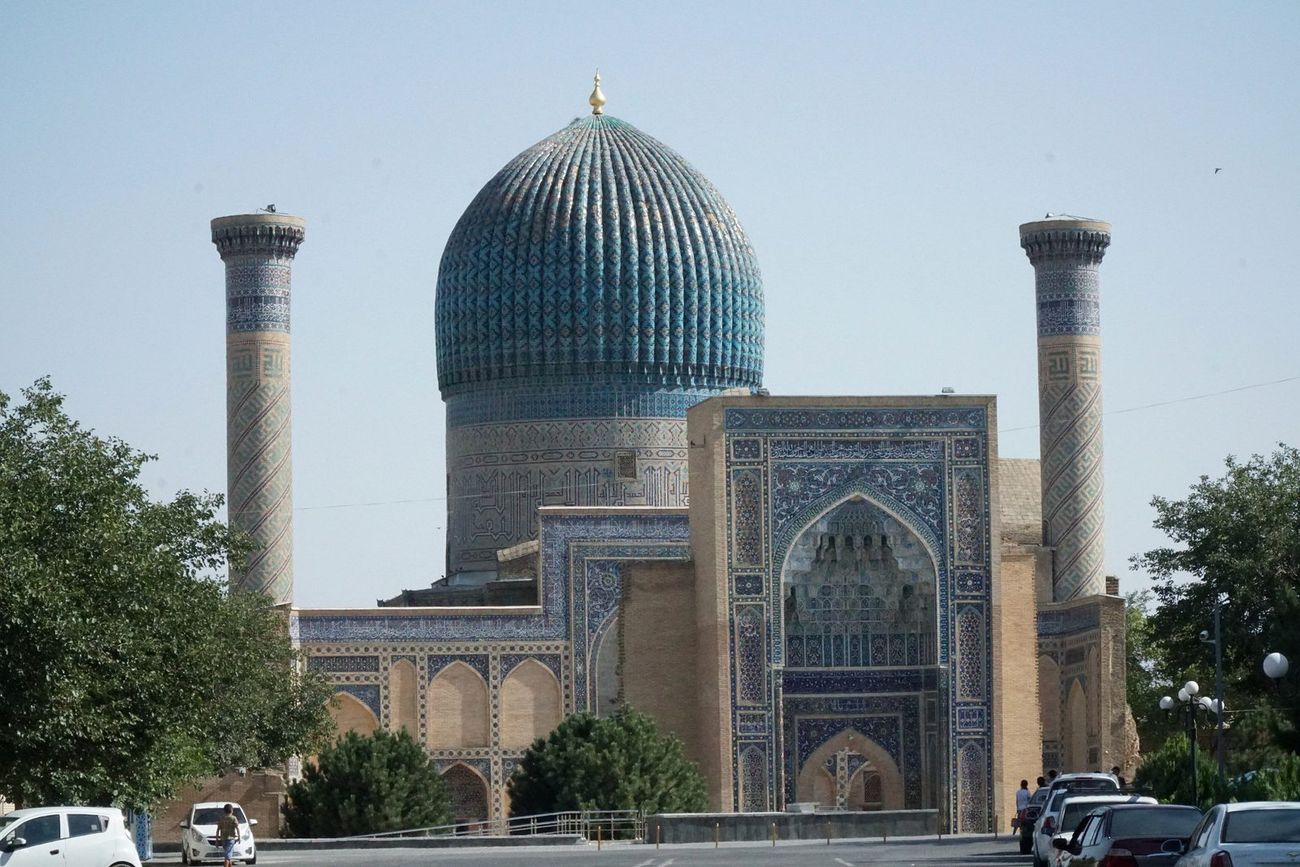
    Gur-e-Amir Mausoleum

    Gur-e-Amir Mausoleum

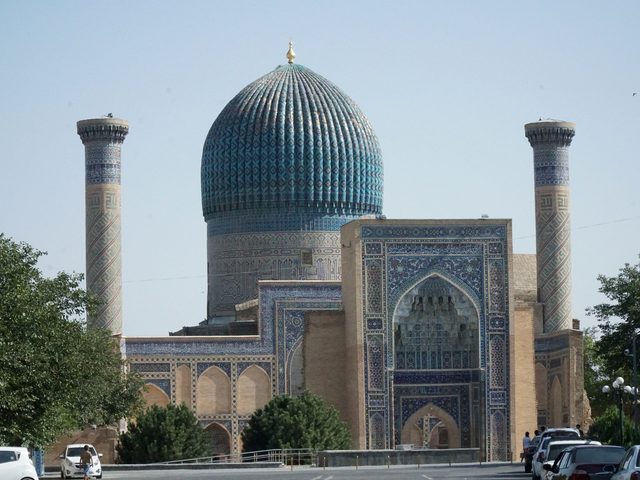
    Gur-e-Amir means “tomb of the ruler”. The mausoleum was begun in the early 15th century for Amir Timur’s beloved grandson Muhammad Sultan, and Timur himself was later buried here. Beside him lie his descendants, among them the astronomer and ruler Ulugh Beg, and his teacher Mir Said Baraka. Outside, a tall ribbed turquoise dome; inside, gilded painting, carved marble and the dark jade slab over Timur’s grave. Nowhere is the scale of the Timurid era easier to feel.
  2. 2
    Bibi-Khanym Mosque

    Bibi-Khanym Mosque

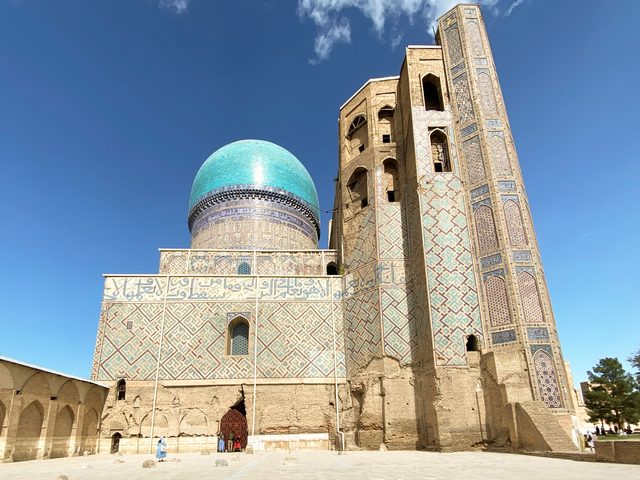
    One of Samarkand’s grandest buildings, erected in 1399–1404 on Amir Timur’s orders. In its day it was among the largest mosques in the Islamic world, with room for up to ten thousand worshippers in the courtyard. The name is linked to Timur’s wife, and the mosque has many legends that guides love to tell. Expect a huge portal, massive domes, mosaics and a marble stand for a giant Quran in the courtyard. Damaged by time and earthquakes, the mosque has been restored.

  3. 3
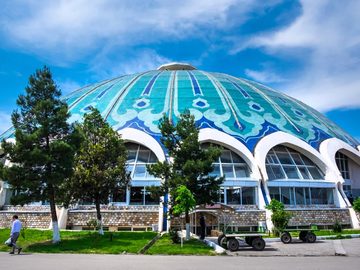
    Siab Bazaar

    Siab Bazaar

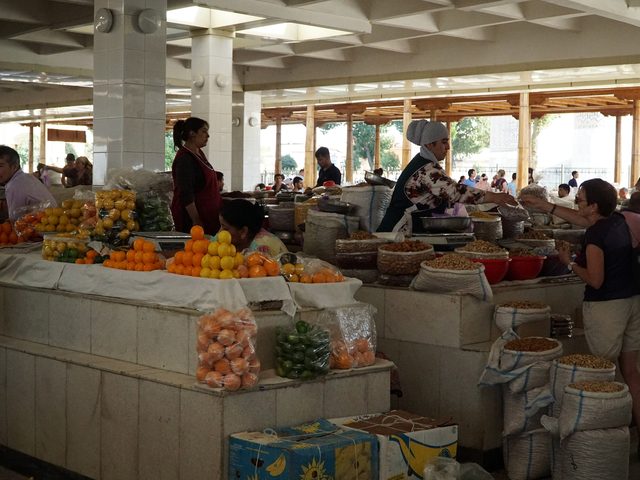
    Samarkand’s largest and best-known traditional market, right next to the Bibi-Khanym Mosque. It sells dried fruit, nuts, spices, oriental sweets, fresh fruit and the famous Samarkand flatbread — round, beautifully patterned and baked in a tandoor. It is not just a place to shop but part of everyday city life: you can watch people trade, chat and treat each other.

    Tip: Bargaining is expected; small banknotes are handy. Buy flatbread and dried fruit at the end so you don’t carry them around all day.

  4. 4
    Shah-i-Zinda Necropolis

    Shah-i-Zinda Necropolis

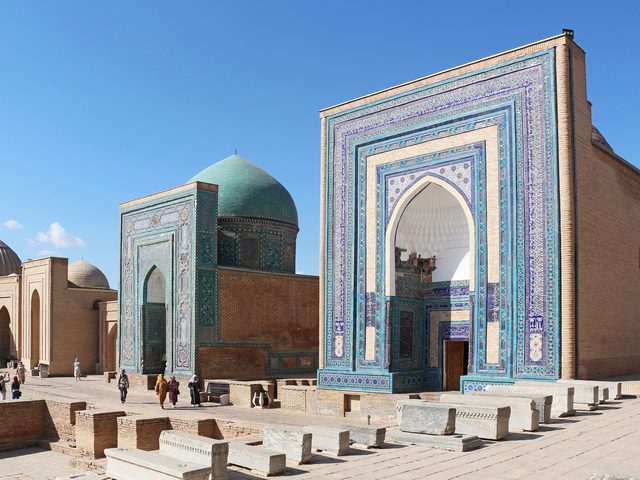
    A famous necropolis whose name means “the Living King”. According to legend, Kusam ibn Abbas, a cousin of the Prophet Muhammad who came to Samarkand to preach Islam, is buried here. Mausoleums from different eras line a narrow lane: dazzling blue tiles, mosaics and carved terracotta make it feel like entering a fairy-tale city. One of the most photogenic ensembles in Central Asia.

    Tip: The complex is on a slope, reached by a staircase, with many steps inside — mind how you feel and wear comfortable shoes. Clothing should be modest.

  5. 5
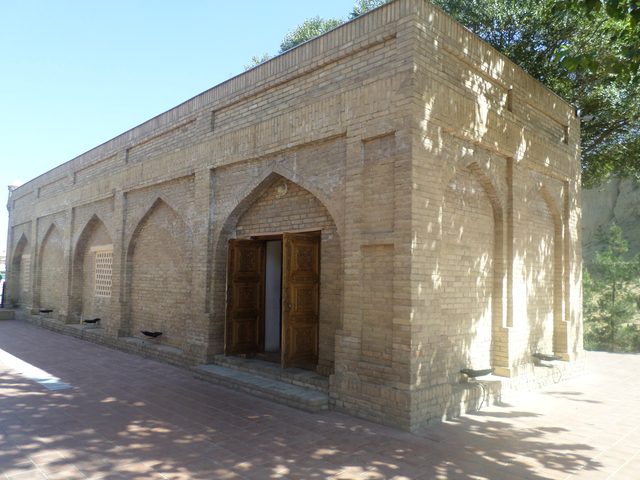
    Mausoleum of Khoja Daniyar

    Mausoleum of Khoja Daniyar

    A revered pilgrimage site on the picturesque bank of the Siab river. Khoja Daniyar is identified with the biblical prophet Daniel, honoured by Muslims, Christians and Jews alike. Legend has it that his remains were brought to Samarkand on Amir Timur’s orders. The grave is unusually long — about 18 metres — and locals say it keeps “growing”. The mausoleum looks out over the river valley, a peaceful end to the programme.

Otherprogrammes

Swipe

Photos: Gur-e-Amir Mausoleum (CC BY-SA 4.0), Bibi-Khanym Mosque (CC0), Siab Bazaar (CC BY-SA 4.0), Shah-i-Zinda Necropolis (CC0), Mausoleum of Khoja Daniyar (CC BY-SA 4.0) — Wikimedia Commons.